Locusts are the biggest, meatiest and, for most first-timers, the most surprising of the four insects you can legally eat in the EU. Here is what they taste like, how they are farmed, what is in them and how to cook them.
Which locust is edible
Only one species is authorised as food in the EU: the migratory locust (Locusta migratoria), approved as a novel food in 2021 after a safety assessment by EFSA. It can be sold frozen, dried or ground, with wings and legs removed. Other grasshopper species sold on street markets in Asia or Mexico are not authorised in Europe, so if a shop here sells "grasshoppers", check the label for the Latin name.
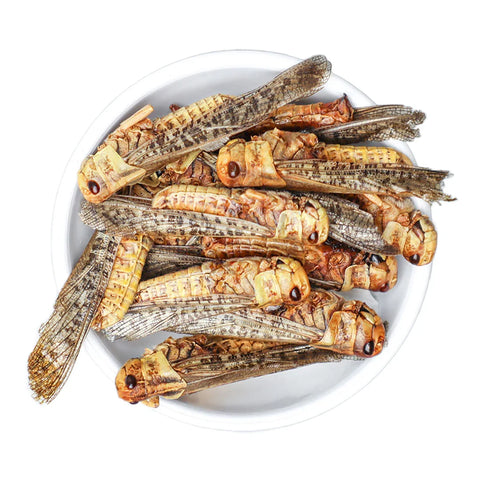
At Sens we sell dried locusts, unseasoned, whole and ready to roast.
What locusts taste like
Crickets are nutty, mealworms are mild. Locusts are the ones people describe as "meat". A dried locust has a crisp, light shell and a flavour most people compare to roast chicken skin, fried prawns or the crispy bits at the edge of a schnitzel. Roasted with garlic, chilli and salt they are closer to bar snacks than to anything exotic.
They are also big enough to be an event. A cricket disappears in one bite; a locust is 4 to 6 cm long and you see what you are eating. That is why they are the classic dare and the classic photo, and why we recommend starting with crickets or mealworms if you want the nutrition without the spectacle.
What is in a locust
- Protein: around 50 to 60 % of dry weight, complete, with all nine essential amino acids.
- Fat: around 10 to 15 %, with a good share of unsaturated fatty acids.
- Chitin from the exoskeleton, an insoluble fibre that works as a prebiotic.
- Iron, zinc, magnesium and B vitamins, including B12.
Nutritionally they sit between crickets (more protein) and mealworms (more fat). The full comparison, with sources, is in our guide to edible insects.
How locusts are farmed
Farmed locusts have nothing to do with the swarms in the news. They are raised in closed, climate-controlled rooms on a plant diet (mostly fresh grass and wheat bran), harvested after about five weeks, then frozen or dried. Because they are cold-blooded, they turn feed into body mass far more efficiently than cattle or chicken, with a fraction of the land and water per kilo of protein. EU farms are inspected under the same food law as any other animal production, and every batch is tested for microbes and heavy metals.
Is it safe to eat locusts?
Yes, with the same exception as all insects: they share the protein tropomyosin with crustaceans and house dust mites. If you are allergic to shrimp, crab or dust mites, you may react to locusts too. Every Sens pack says so. Wings and hind legs are removed before sale because they are tough and can be unpleasant to swallow; if you ever get a whole locust elsewhere, pull them off before eating.
How to cook locusts
- Roast them whole. Dry pan or oven at 180 °C for 5 to 8 minutes until crisp. Salt, garlic, smoked paprika or chilli. Eat like crisps or drop them on a salad.
- Fry them. A minute in hot oil gives the crunchiest result. Finish with lime and sea salt.
- Put them on something. Tacos, ramen, fried rice, a cheese board. They are the topping, not the base.
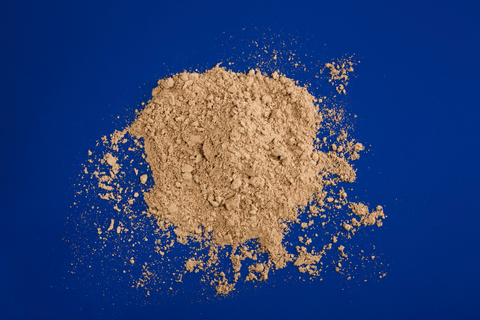
- Grind them. Blitz dried locusts into a coarse powder and use it like a savoury seasoning on popcorn, eggs or roasted vegetables.
Store them dry and closed like nuts; unopened they keep for a year. If locusts feel like a big first step, our tasting bundle of seasoned crickets and mealworms is the gentler way in, and this article covers why people eat insects at all.